Solayer is a hardware-accelerated SVM Layer 1 for real-time settlement
In short: Hardware-accelerated SVM Layer 1 blockchain using RDMA and InfiniBand networking to support high-throughput, low-latency execution.
Solayer is a hardware-accelerated SVM Layer 1 built around InfiniSVM, a design that combines Solana-style execution with dedicated networking hardware, RDMA, InfiniBand, and software-defined networking. Its aim is direct: move blockchain transactions through a multi-execution cluster with very high throughput, low latency, and one atomic state, so payments and on-chain applications feel closer to real-time infrastructure than a conventional public chain.
The project is best understood as a performance-first blockchain architecture rather than a simple staking app or wallet feature. It brings SVM execution into an environment shaped by data-center networking ideas: bypassing slow operating-system network paths, reducing CPU overhead, and scheduling transactions around account access patterns. That gives builders a familiar programming model while pushing the underlying network toward hardware-level speed.
InfiniSVM turns SVM execution into a clustered network
InfiniSVM is the core concept behind Solayer Chain. SVM stands for Solana Virtual Machine, the execution environment known for parallel transaction processing and account-based scheduling. In this design, the chain expands that model into a multi-execution cluster connected through SDN and RDMA, rather than treating every validator or execution path as a slow, isolated participant in a standard peer-to-peer network.
The important phrase is atomic state. Many scaling systems increase capacity by splitting activity across separate shards, rollups, or side environments, then reconcile state later. This design is presented as a way to keep a unified state while spreading execution work across specialized infrastructure. That matters for DeFi, payments, and consumer applications because a trade, transfer, or balance update is more useful when the rest of the system sees it immediately.
RDMA and InfiniBand are the unusual part
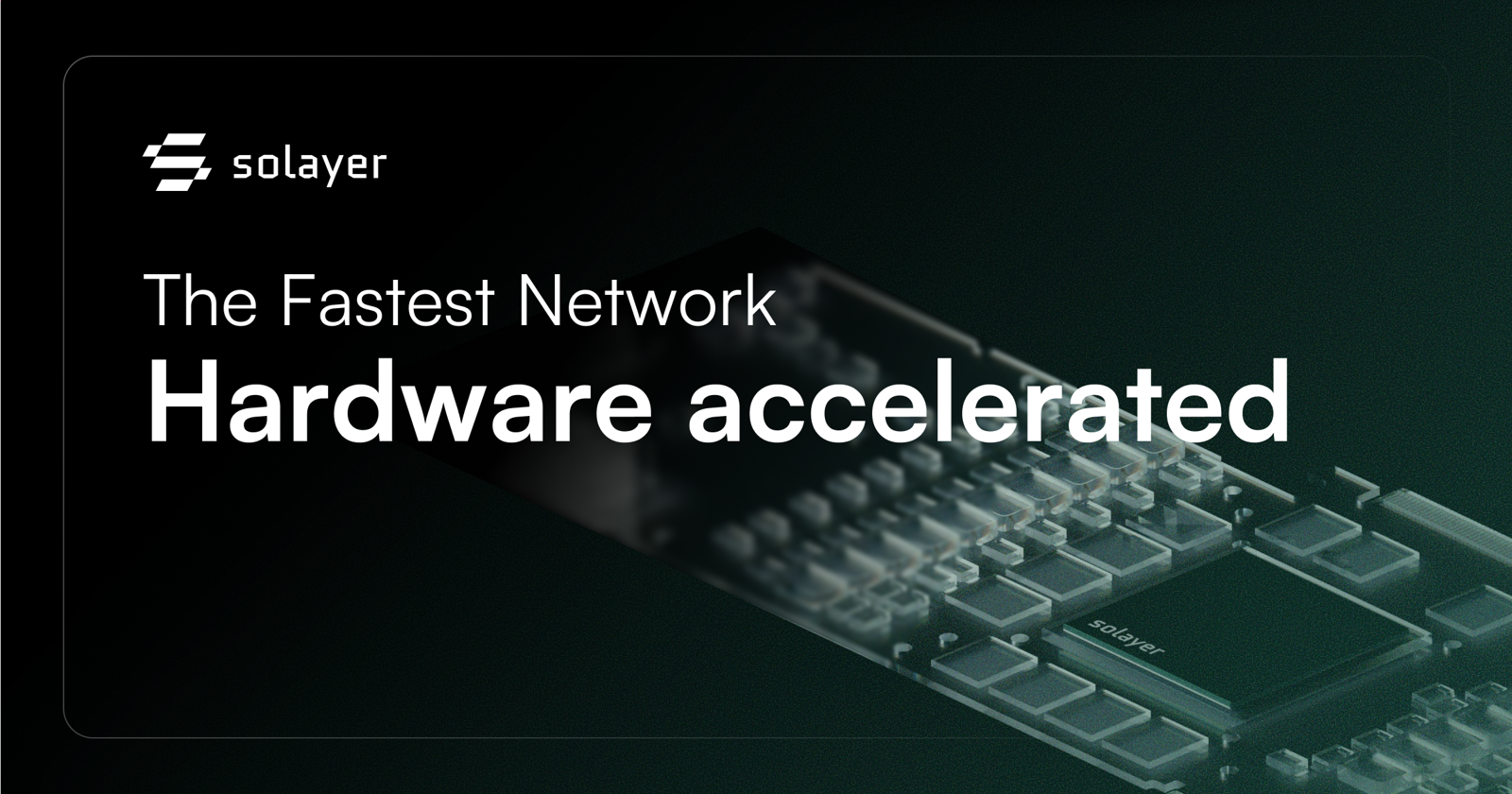
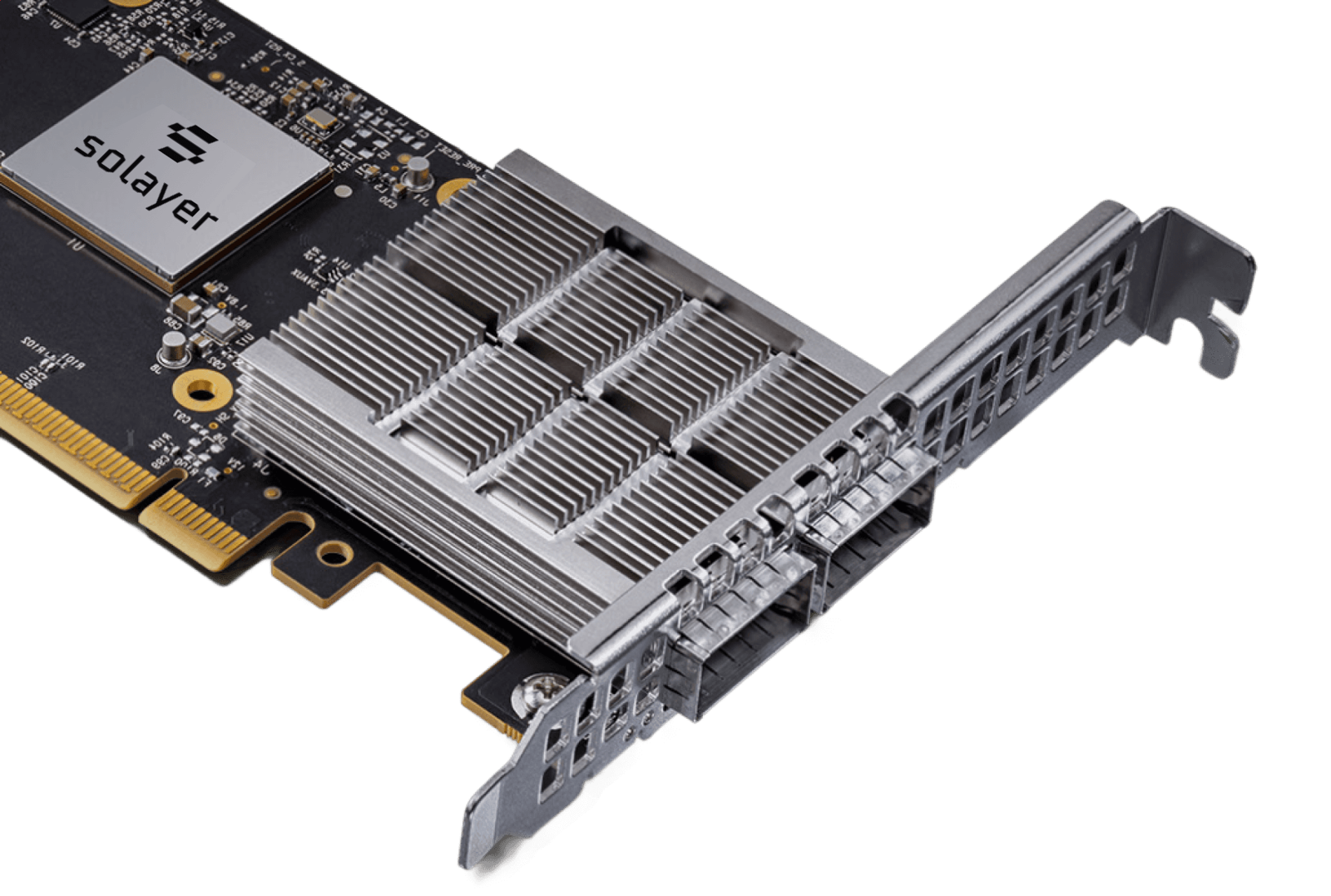
RDMA, or Remote Direct Memory Access, lets one machine read or write memory on another machine with limited CPU involvement. InfiniBand is a high-performance networking technology used in demanding computing environments. Solayer applies those ideas to blockchain execution by reducing the network stack overhead that slows ordinary message passing between machines.
This choice is the project's clearest differentiator. Conventional blockchain nodes exchange data through general-purpose networking and operating-system layers. Here, dedicated network hardware moves data more directly, which supports lower latency and higher bandwidth. The official materials describe a target of 1,000,000 transactions per second and more than 100 Gbps network throughput, figures that frame the project as infrastructure for dense, high-frequency activity rather than occasional settlement.
The multi-executor model schedules work before congestion forms
High throughput comes from more than faster wires. The protocol simulates speculative transaction execution, studies which accounts each transaction touches, and builds fine-grained schedules from those access patterns. When two transactions do not fight over the same state, they move through separate execution paths. When conflicts exist, the scheduler has the information it needs to order work coherently.
Database sharding with RDMA adds another layer. State access is divided so execution clusters retrieve and update data without forcing all activity through a single bottleneck. Pre-execution at the edge then prepares transaction work closer to where it arrives, which shortens the path from submission to execution. Solayer uses these techniques to make parallelism a native property of the chain, not an afterthought layered above it.
What real-time money movement changes for apps
Payments are the most obvious use case because payment users notice delay immediately. Solayer Pay points that ambition at everyday money movement through mobile access on iOS and Android. A blockchain payment rail with extremely low latency has a different product feel from a chain where users wait through multiple confirmations before a merchant or app treats a transfer as final.
DeFi also benefits from predictable execution. Order books, liquidity routing, lending liquidations, arbitrage, treasury movement, and NFT marketplaces all depend on fast state changes. Developers building SVM applications care about more than headline throughput; they need a chain that keeps account reads, writes, settlement, and composability aligned. When execution is fast but state fragments across systems, application design becomes harder. A shared atomic state keeps complex on-chain interactions easier to reason about.
How builders start thinking about the stack
A developer approaching Solayer starts from the SVM mental model: accounts, programs, transaction instructions, parallel execution, and composability with Solana-style tooling concepts. The difference is the performance envelope underneath. Applications that struggle with bursty demand, time-sensitive settlement, or state-heavy transaction flows are the natural candidates to evaluate first.
Useful early questions include:
- whether the application relies on very fast payment confirmation;
- whether many users touch different accounts at the same time;
- whether account conflicts create execution bottlenecks;
- whether a shared state is essential to the product design;
- whether mobile access through payment flows matters to adoption.
Those questions keep the architecture discussion grounded. A simple token page does not need an exotic execution cluster. A market, exchange, payment network, game economy, or high-volume consumer app gains more from a chain that treats latency, scheduling, and bandwidth as core design constraints.

sSOL and deposits connect users to the ecosystem
The public site references total deposits, sSOL APY, and user counts, which places liquid staking and deposit activity inside the broader ecosystem. sSOL is the visible staking-related asset in that flow. A user looking at it should separate two ideas: the chain architecture behind InfiniSVM and the yield-bearing or deposit products that sit around the network.
That distinction matters because infrastructure and tokenized yield behave differently. Chain performance is about execution, state, and networking. A staking or liquid staking position is about asset exposure, validator economics, liquidity, smart contract design, and redemption behavior. The same brand ties them together, but the risks and user decisions are not identical.
Fees, speed, and final user experience
Ultra-fast chains still need economic controls. Transaction fees discourage spam, prioritize scarce resources, and help applications price usage. The official material emphasizes performance targets and networking design rather than publishing a simple universal fee schedule for every user action, so the clearest way to understand cost is by the action being taken: payment, app interaction, deposit, swap, or developer deployment.
Speed changes the user's sense of cost. A low fee paired with slow confirmation feels expensive when it blocks checkout, trading, or settlement. A predictable fee with near-real-time execution feels cleaner because the app can update balances, inventory, orders, or positions without long waiting states. Solayer is positioning its chain for that second experience, where latency is treated as part of product quality.
Risks come from complexity as much as markets
A hardware-accelerated chain introduces operational complexity. RDMA, InfiniBand, clustered execution, account scheduling, and sharded data access raise the engineering bar for the network. The design promises serious performance, but the same specialized architecture requires strong implementation, monitoring, and fault handling. The short caution is practical: evaluate live network behavior and product terms before treating any displayed yield, speed, or capacity number as the whole story.
Smart contract risk also remains part of every on-chain application. Wallet approvals, token contracts, bridge routes, deposit products, and app-specific logic still determine what a user signs and what assets move. Hardware acceleration improves the path transactions travel; it does not remove the need to understand the transaction request in front of you.
Where it fits beside Solana, rollups, and high-throughput L1s
Solana is the closest conceptual neighbor because SVM execution and account-based parallelism are central to both conversations. The difference is the hardware-accelerated network approach and the InfiniSVM cluster model. Rollups take another path: they move execution away from a base layer and settle proofs or data back to another chain. That works well for modular scaling, but it introduces bridge and settlement boundaries that affect composability.
Other high-throughput Layer 1 networks compete on virtual machine design, validator architecture, fee markets, or parallel execution. Solayer's bet is narrower and more concrete: real-time blockchain performance comes from pairing SVM semantics with high-performance networking primitives. If that architecture delivers under real demand, it gives payment apps and state-heavy crypto products a chain designed for the pace of modern financial software.
Solayer FAQ
What is the difference between Solayer Chain and Solayer Pay?
Solayer Chain is the hardware-accelerated SVM Layer 1 built around InfiniSVM, RDMA, InfiniBand, and a multi-execution cluster. Solayer Pay is the user-facing payment product connected to that ecosystem, with mobile access through app stores. One is the underlying blockchain infrastructure; the other is a payment experience that uses the network's focus on fast settlement.
Does Solayer use the same virtual machine as Solana?
It uses SVM, the Solana Virtual Machine model, as the execution foundation. The distinctive part is the surrounding architecture: InfiniSVM expands SVM-style parallelism with clustered execution, RDMA networking, InfiniBand, SDN, and account-aware scheduling. That makes it related to Solana from a developer mental-model perspective while pursuing a different infrastructure design.
Which wallets or apps are relevant for using Solayer?
The public ecosystem points users toward the project's launch app and Solayer Pay on mobile. Wallet compatibility depends on the specific product flow, network support, and transaction type. Users interacting with SVM-based apps should expect wallet signing, asset approvals, and network selection to matter, especially when moving between payment, deposit, and app interactions.
Fees on Solayer depend on what action?
Fees depend on the transaction or product being used, such as a payment, deposit, swap, app interaction, or developer operation. The project's public positioning emphasizes throughput, RDMA, InfiniBand, and low-latency execution rather than a single flat cost for every action. The relevant cost is the fee shown in the app or wallet before signing.
Can developers build existing SVM-style applications on this network?
Developers familiar with SVM concepts have a useful starting point because the chain is built around SVM execution. Existing application logic still needs review for network-specific tooling, deployment process, accounts, dependencies, and performance assumptions. The strongest fit is an app that benefits from parallel execution, shared state, and very low-latency transaction processing.
What happens if two transactions touch the same account state?
The scheduler uses account access patterns to decide how transactions move through execution. Transactions that do not conflict run more easily in parallel, while transactions touching the same state need ordering so balances and program state remain coherent. This account-aware scheduling is central to how SVM-style systems preserve correctness while increasing throughput.